What Makes Some AI Models Survive While Others Fade Away?
Outreach done by humans is expensive — done by agents, it's programmable leverage.
Lindy: autonomous outreach agents built to act like SDRs
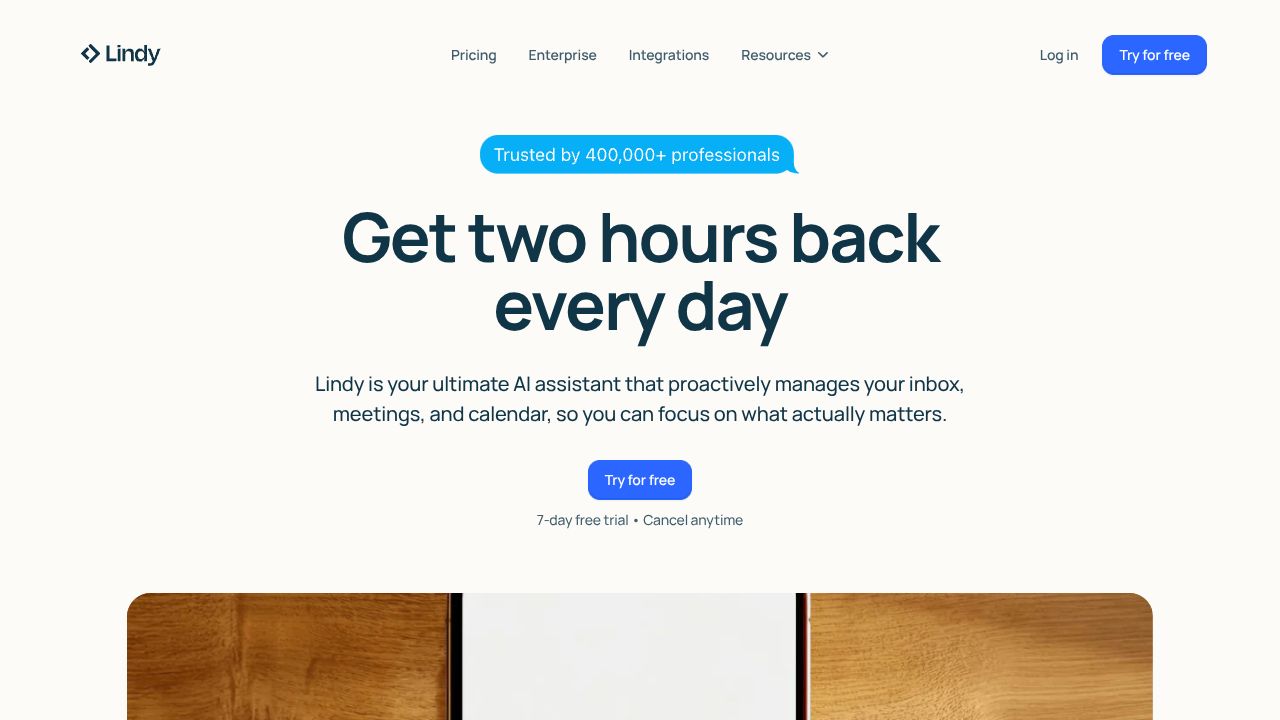
In my 15 years watching AI eat pieces of workflow, Lindy stands out as a focused attempt to replace whole SDR workflows with configurable autonomous agents. At its core Lindy builds custom AI agents that own lead enrichment, multi-channel sequencing (email + LinkedIn), follow-ups, and CRM sync — essentially a virtual SDR that persists context across conversations. Architecturally it’s the kind of product you’d expect from a modern automation stack: a pluggable LLM layer, retrieval for context, orchestration for multi-step flows, and connectors to messaging and CRM endpoints. The design philosophy favors end-to-end ownership of outreach — not just templates, but agents that can research, decide next actions, and write messages with stateful memory.
Architecture & Design Principles
Lindy appears to be designed as an event-driven microservice system: discrete agents (stateless workers) orchestrated by a controller that maintains conversation state and business rules. Key technical decisions likely include a separation between:
- the reasoning layer (LLMs + RL/heuristics) used for message generation and next-action selection,
- a retrieval layer (vector DB + document store) for lead enrichment and historical context,
- an execution layer that interfaces with email/LinkedIn/CRM via API or controlled automation. Scalability is addressed through horizontal worker pools, queueing (to smooth LLM rate limits), and sharding of tenant data. The product tradeoffs prioritize conversational continuity (long-lived agent state) over pure throughput — appropriate for outreach where thread context matters more than raw message volume.
Feature Breakdown
Core Capabilities
- Custom AI agents for research/follow-ups/CRM sync: Lindy’s agents combine retrieval-augmented generation (RAG) with tabular lead metadata to craft personalized outreach. Use case: a recruiter bot enriches a LinkedIn lead with role history and composes a tailored message, then logs outcomes back to the ATS.
- Multi-channel sequencing (email + LinkedIn): Technically this requires channel adapters that handle API auth, sending, receipts, and bounce/opt-out logic. Use case: a 5-step cadence where email opens trigger a LinkedIn touch, with agent logic branching on reply intent.
- Sales/support/recruiting automation & task assignment flexibility: Agents can escalate to human reps, create tasks, or update CRMs programmatically. Use case: a support outreach agent that routes unresolved replies to a human and updates the ticket status.
Integration Ecosystem
Lindy exposes connectors to CRMs and messaging platforms via APIs and webhooks, and supports event-based integration for real-time updates. In practice you'll see patterns like webhook callbacks for delivery status, REST APIs for agent control, and likely prebuilt CRM syncs to push field updates and conversation transcripts. For teams, the ability to plug into existing pipelines (inbound lead webhooks → Lindy agent → CRM update) is critical.
Security & Compliance
Expect standard enterprise controls: TLS everywhere, encryption at rest, tenant isolation, RBAC, and audit logs for agent actions. Lindy’s public materials don’t list certifications; in my experience you should validate SOC 2 / ISO / GDPR readiness before routing PII or high-risk lead data through agents.
Performance Considerations
LLM-driven generators bring variable latency and cost. Lindy must balance synchronous UX (fast replies) with async batching for cost efficiency. Practical architecture choices are request queuing, token-preserving prompts, caching enrichment results, and backpressure on agents to respect rate limits for LinkedIn/email APIs. Reliability relies on retry idempotency and clear failure modes (e.g., hold messages when delivery fails).
How It Compares Technically
While Origami Agents excels at allowing developers to script complex logic and loops into agent flows, Lindy is better suited for teams wanting turnkey, end-to-end outreach agents that behave like human SDRs without heavy engineering. Creatio is a low-code workflow and CRM enhancer — ideal for enterprises that need granular process modeling and compliance, whereas Lindy prioritizes conversational intelligence and autonomous sequencing. HeyReach focuses on unifying email + LinkedIn inboxes with outreach automation; Lindy differentiates by pushing more autonomy into agents (research + decisioning) rather than inbox unification. Pricing for Lindy is currently unknown; budget-conscious teams should compare cost-per-message and LLM compute exposure when choosing.
Developer Experience
From what I’ve seen, Lindy emphasizes templates and agent configuration over raw SDKs — appealing to product teams that want outcomes, not infrastructure. Good developer experience hinges on comprehensive API docs, sandbox workspaces, and webhook debugging tools. If you plan to integrate deeply, test the quality of sample flows, the granularity of control (timeouts, retry policies), and whether SDKs exist for your stack.
Technical Verdict
Lindy’s strength is its focused proposition: configurable, stateful agents that own end-to-end outbound workflows. For teams without dedicated SDRs or engineering bandwidth to stitch RAG, orchestration, and connectors, Lindy offers immediate leverage. Limitations include opaque pricing and the usual LLM constraints — latency, stochastic outputs, and the need for strong guardrails. In short: choose Lindy when you need autonomous human-like outreach at scale; choose Origami Agents or Creatio if you need fine-grained process control, or HeyReach if inbox unification and simple cadences are your priority.
What others won't tell you: autonomous agents are only as good as the error-handling you build around them. In my experience, the real engineering is not the LLM prompts, but the observability, opt-out handling, and escalation paths you add after deployment. Lindy gives you the agent — you still need to design the safety rails.